
AI becomes a true competitive advantage when embedded within manufacturing expertise. This article explores how ERP foundations and captured knowledge create scalable operational intelligence.

AI becomes a true competitive advantage when embedded within manufacturing expertise. This article explores how ERP foundations and captured knowledge create scalable operational intelligence.

Most ERP implementations focus on technology rather than operational expertise. This article explains how systemising knowledge creates scalable assets that drive sustainable growth.
Winning major contracts in regulated industries can expose hidden operational risks. This article explains how ERP readiness, compliance and scalable processes enable sustainable contract delivery.

A business’s ability to embrace a strategic and systematic approach to sourcing goods and services results in many advantages. But how do you know if your business is ready to take purchasing to the next level and embrace a procurement mindset? And, how does procurement technology fit into the picture?

Industry 4.0 is the latest industrial revolution, and is all about smart manufacturing and using digital technologies to increase productivity, flexibility, and agility.
Procurement thinking is a strategic approach to sourcing and procurement that focuses on the entire supply chain rather than just the purchasing process. With this approach businesses can transform their sourcing and procurement operations for greater value creation and innovation.

A better understanding of the differences between ‘Procurement’ and ‘Purchasing’ will make it clear that the two terms are not interchangeable. They are differences that any organization operating in today’s business climate needs to know.
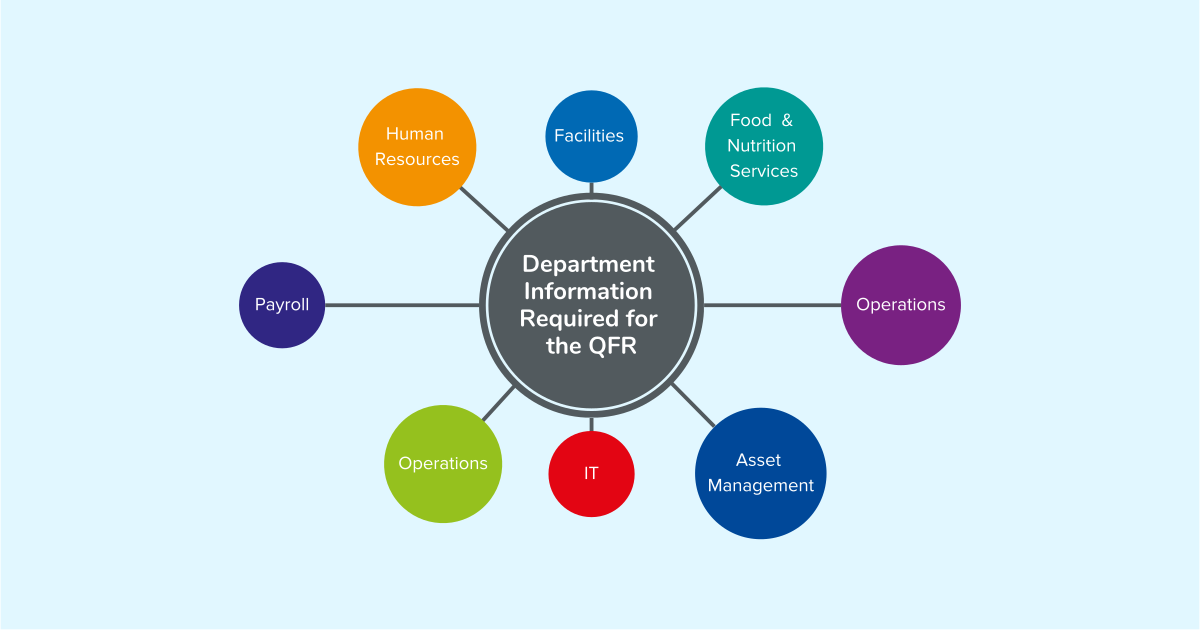
The deadline for aged care organisations to submit their first Quarterly Financial Report is fast approaching, and, if your organisation has chosen to manually collect the required information from multiple departments and meet the stringent reporting and record keeping obligations, you potentially have as many as 4 weeks of work ahead of you. There is however, a silver lining. You will also be collecting a swathe of information that will help you build a business case for investing in business improvement measures, or an ERP system.
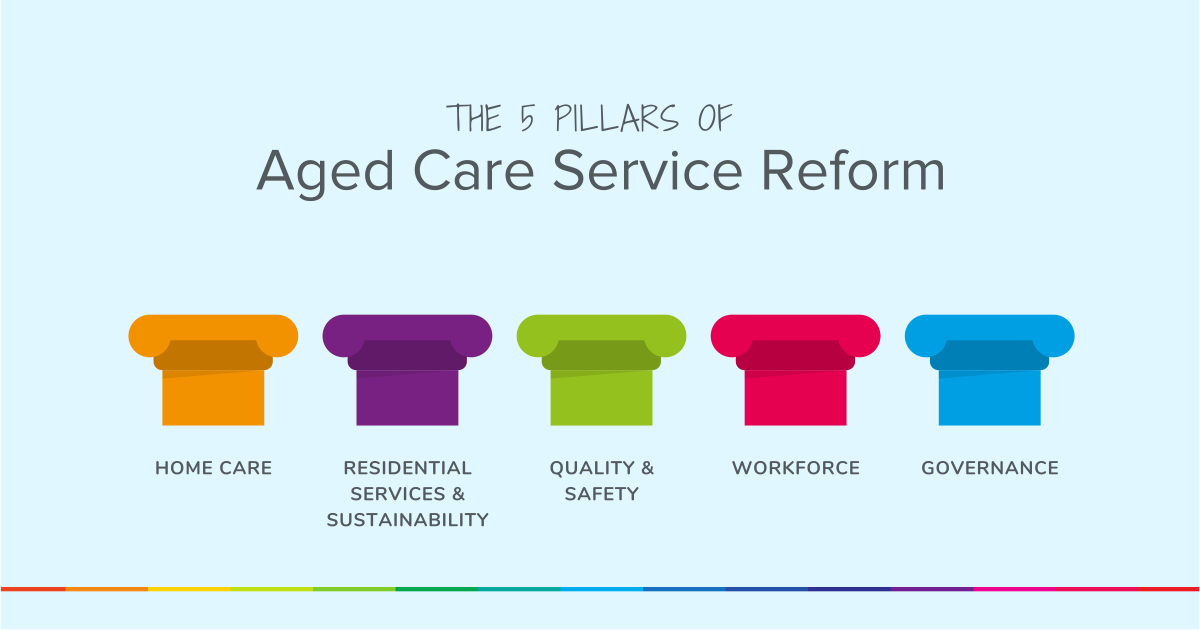
The aged care provider industry is experiencing a raft of changes across five distinct pillars – home care, residential aged care services and sustainability, residential aged care quality and safety, workforce, and governance. The reforms have the potential to be disruptive to your business, which may be disastrous in an increasingly competitive environment. Reviewing and upgrading your business management (ERP solution) may be the answer.

Reliability, accessibility, flexibility, and speed are all desirable performance outcomes that cloud computing technology can offer an organisation. So, if the performance benefits of cloud computing match the strategic direction of a business, and an ERP system is designed to integrate all business functions, why would some businesses steer clear of the cloud? This article seeks to debunk common misconceptions and myths of Cloud and highlight the positive attributes of Cloud ERP!
3D printing delivers a host of benefits to a manufacturer. The full extent of these can be realised with the right ERP system with seamless integration functionalities in place.
You know your business will benefit from a new ERP system, but, like most purchases in life, it’s time to talk about the price. So how much does a new ERP solution actually cost?

Outdated systems, manual tasks, and unreliable data can lead to devastating bottlenecks and customer dissatisfaction. So, if your business is suffering from head-spinning processes, nightmarish end-of-month reporting, and a hope-for-the-best attitude, now’s the time to capitalise on growth opportunities by adopting an ERP system.